



The 60th Karlovy Vary International Film Festival is still in its early stages, but it’s already showing a wealth of wonderful films. In this dispatch, you’ll find three films of differing origins. One is a world premiere in the festival’s main Crystal Globe competition, while the others previously debuted at the Berlinale and Cannes. They also, interestingly, concern memory and the heirlooms of the past we carry within ourselves.
One of the great early discoveries of this year’s Karlovy Vary International Film Festival is Mads Mengel’s deeply uncomfortable Nordic family drama “The Guest.” Playing in the Crystal Globe Competition, the film is set at a seaside resort where eager parents, Emilie (Mette Klakstein Wiberg) and Karl (Simon Bennebjerg), have invited family to christen their newborn baby Elliot. As mother and father settle in, the invitees—Emilie’s parents, Frank (Peter Gantzler), and Kirsten (Petrine Agger), along with Karl’s sister, Rikke (Josephine Park)—arrive. The resort they occupy is pristine and manicured, with no unwanted detail left for the eye to capture. That is, until Karl’s estranged mother, Vibeke (Trine Dyrholm), arrives unannounced with a flurry of energy that seems to make the air shift direction.
It doesn’t take long before we learn why Karl didn’t invite his own mother to her grandson’s christening: Unsolved trauma and buried angst belonging to a difficult childhood helmed by a mentally ill mother soured Karl on Vibeke long ago. And despite many around him, including his own wife and sister, telling him to empathize with her plight, the bridge between mother and son might as well be on two different continents.
Consequently, “The Guest” takes a nuanced interest in forgiveness, understanding, and the kind of emotional and personal growth that urges one not to pass the scars of the past on to the people of the present. This taut, controlled, crucible of empathy, which relies on cutting cross zooms to up the sadness of the situation, is supremely well acted: from a restrained Bennebjerg, who acutely counter-balances the frayed Park, to the charged Dyrholm, whose depiction of this bellicose yet vulnerable woman never crosses over into the overwrought. These feel like the right people, delving into real pains, with a cautious openness that treats the difficult obstacles in their way with the complexity and respect they deserve.
Mengel’s feature directorial debut, therefore, is a stunner not solely because of the tough situation it presents, but primarily because it moves beyond an engaging premise to become a work whose well-drawn characters invite hard-earned poignancy without begging for easy forgiveness.
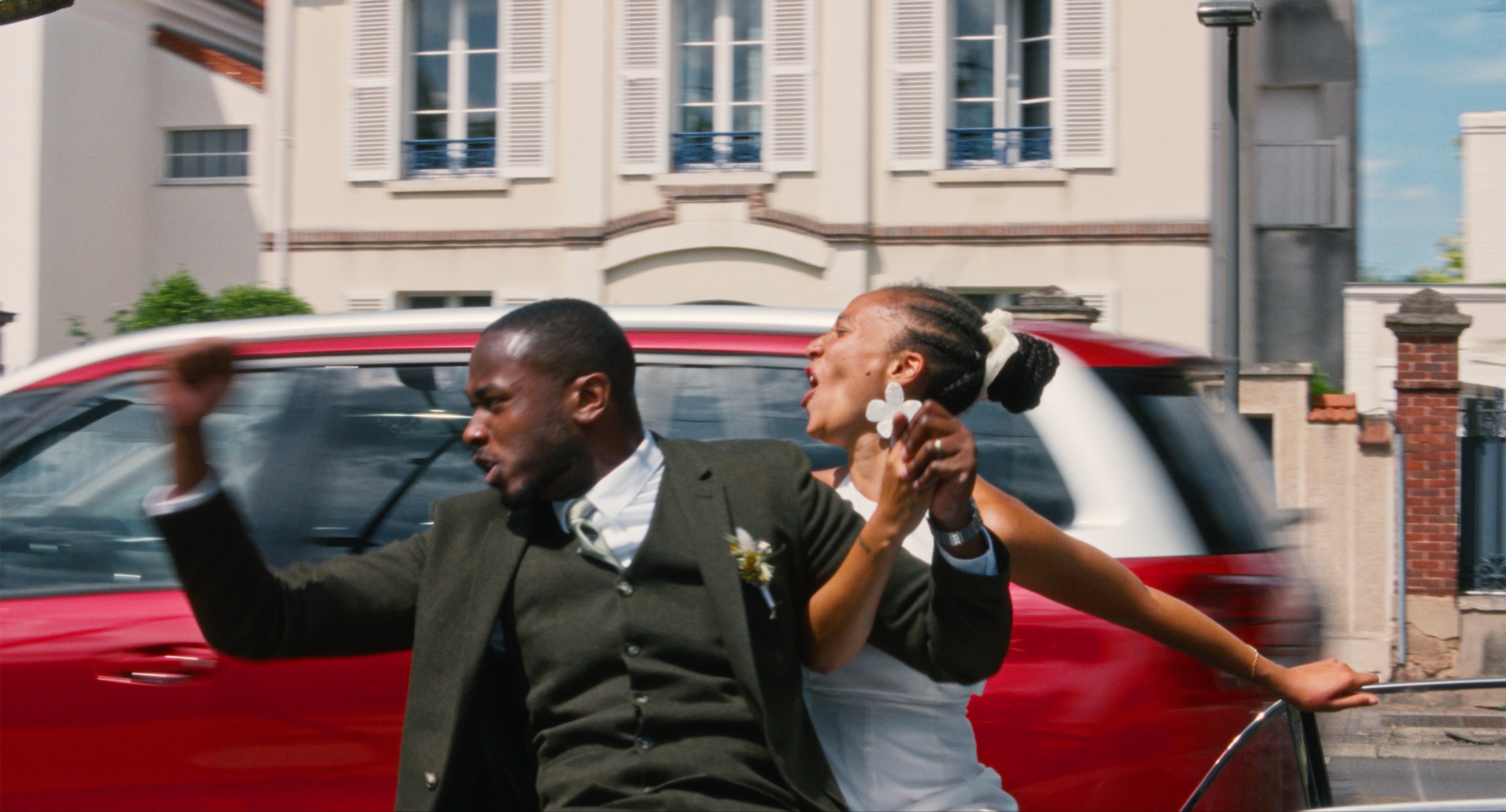
Arriving at KVIFF from the Berlinale, writer/director Alain Gomis’ soulful, three-hour epic family drama “Dao” moves with an immense awareness of time, culture, ancestry and kin. It begins, cheekily yet sweetly, as a documentary: Gomis speaks with the actors during their auditions about what parts they’d like to play. As the film progresses, these documentary segments cue the film’s hefty topics (there’s an instance where each actor is asked about their relationship to their father).
From this form, Gomis often pivots in and out of something formless. In fact, it might be better to say that he slips into spaces, moments, and memories with the suddenness of a breeze that passes through two events. The first, set in France, concerns a wedding between Nour (D’Johé Kouadio) and James (Mike Etienne). The second follows Nour and her mother, Gloria (Katy Correa), as they travel to the latter’s village in Guinea-Bissau for a ceremony commemorating the one-year anniversary of Béa’s father’s passing. It’s not immediately clear whether Gomis wants to contrast these ceremonies (one is clearly more Western-infused, while the other is steeped in a different tradition) or to parallel how both inspire community.
Oftentimes the score’s plaintive jazz motif (the director’s previous film was the Thelonious Monk documentary “Rewind & Play”) signals an abrupt jump between spaces: the countryside cathedral that’s the site of Nour and James’ wedding and the colorful village that’s filled with indelible individual faces. Conversely, by the final third of the picture, the score binds these ceremonies together through the common occurrences that happen whenever varied friends and family mix past lives with booze.
Gomis, of course, dives into more than these characters’ interpersonal dynamics. There’s the imperativeness of oral storytelling, the specter of the slave trade (particularly as it relates to the diaspora), the multifacetedness of Blackness—which can traverse through bi-racial or bi-ethnic categories—caused by colonization, and the struggle of retaining traditions and finding success faced by those who decide to emigrate to the West.
With such sprawling interests, Gomis hasn’t rendered a plot-based film. Nor does he move with a conventional rhythm. Scenes digress, the camera imperfectly roves, and the pace speeds and slows without any concern for how these narrative or temporal choices might be perceived. Much like one of the film’s best scenes, a near acapella wedding rendition of the Fugees’ “Killing Me Softly With His Song,” whose stirring immersion recalls Steve McQueen’s “Silly Games” scene in “Lover’s Rock,” the film translates the lived experience of Blackness into practice. What does that mean? “Dao” understands that Blackness is never still and rarely controlled; it’s unconventional only to outside eyes, but it never lacks interest in how the moment relates to one’s kin. “Dao,” therefore, is a beautiful communion with the cinematic and ancestral spirits.
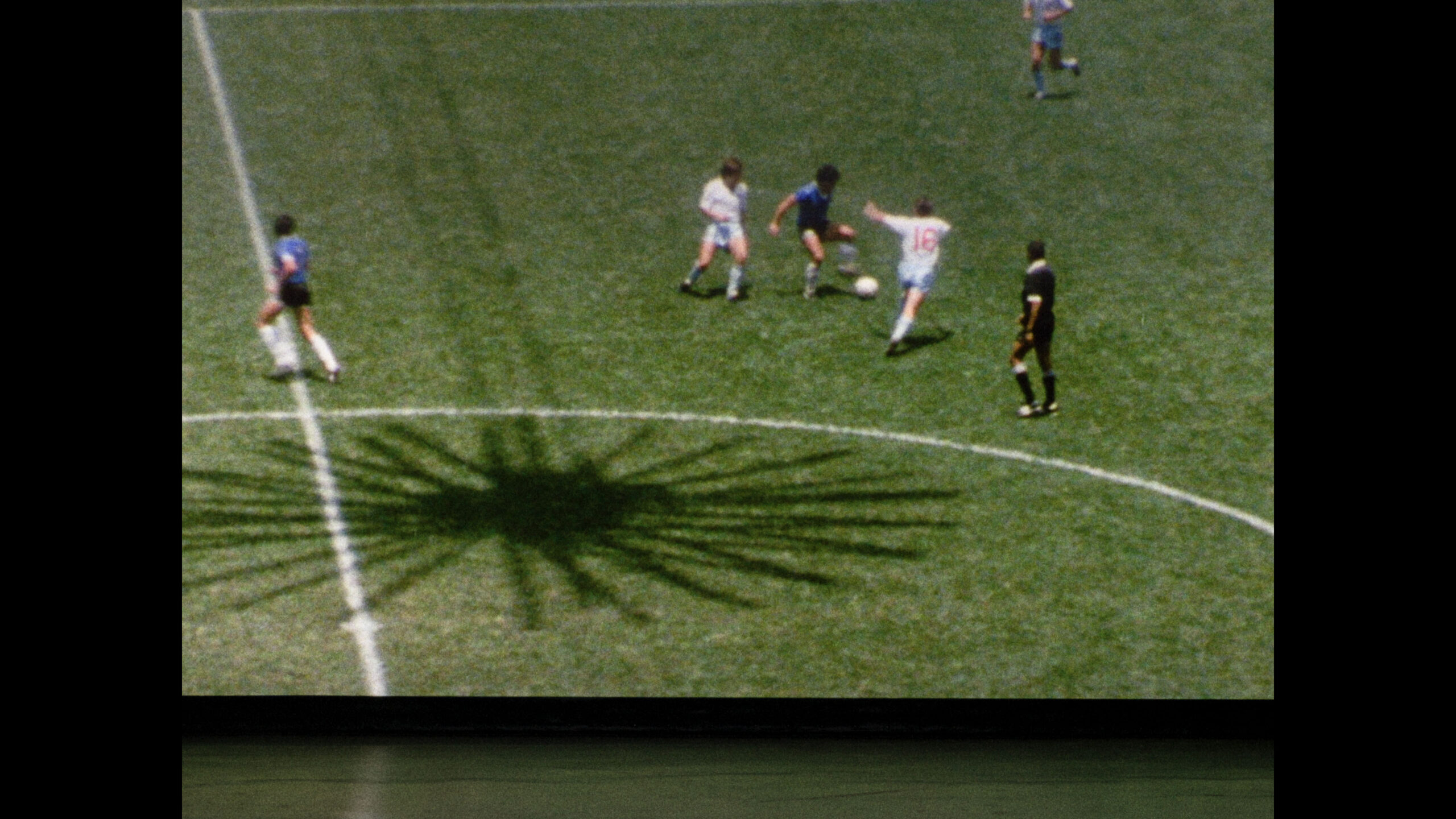
In June 1986, an event with wide-ranging ramifications occurred: Argentina faced England in the World Cup quarter-final. The game would feature one of the most infamous goals in soccer history, “The Hand of God,” delivered by its brightest star: Diego Maradona. More than a sporting contest, the confrontation was the culmination of a fractious relationship between two countries and the leveling of a long-uneven geopolitical playing field. Juan Cabral and Santiago Franco’s entertaining documentary, “The Match,” which originally premiered at Cannes, recalls that game and the context surrounding it through the recollections of those who lived it.
English striker Gary Lineker and Argentine forward Jorge Valdano provide the accessible frame for this poppy blast from the past. They, along with their former teammates, watch the projected footage with nostalgia, admiration, and sometimes pain. Lineker also guides us through each sequence’s key bullet points, recalling the earlier 1966 meeting between England and Argentina, the 1982 eruption of the Falklands War, and the doom that Thatcherism wreaked on both countries. References to these historical components are often inspired by whatever is happening in the match, causing the film’s continuum, which operates similarly to “The Last Dance,” to shift back and forth between the past and the present subject.
Sometimes the heavy narration can make one feel like “The Match” doesn’t remotely trust its audience, dragging one from subject to subject with the subtlety of a ball to the head. But these overworked explanations do fold in neatly with the consciously overcooked use of music, which often matches soaring classical music to the game’s highlights—inciting a cheeky grandeur to take hold. Other highlights include the breakdown of the “Hand of God” evidence (did Maradona commit an illegal handball?) and some marveling by the subjects of what’s often considered the goal of the century. All of the former participants respect Maradona, even as some still hold a grudge against him for not personally admitting that he cheated (tellingly, John Barnes, the only person of color among the Englishmen, is the most forgiving).
At its worst, “The Match” is repetitive and circular in ways that don’t always serve the material. But when it’s humming, which it often is, Cabral and Franco’s ode to soccer glory is as earthshaking as its absorbing subject.